Serving Albuquerque & Rio Rancho
Protect your home from radon
Professional radon testing & mitigation in Albuquerque & Rio Rancho
Radon is the leading cause of lung cancer among non-smokers in the United States, and it is found in homes across the Albuquerque metro. You cannot see it, smell it, or taste it — the only way to know your level is to test.
EPA-based testing protocols
Closed-house conditions, correct device placement, and documented test conditions on every measurement.
Diagnostics before system design
Sub-slab communication is measured at your home before a suction point count or a price is quoted.
Verification testing
Every installation ends with a 48-hour post-mitigation test and written pre/post documentation.
Clear explanations
You get plain-language answers about your result, your options, and the trade-offs — before any work is scheduled.
The problem
Why radon matters here
Radon is a radioactive gas produced as uranium in soil breaks down. You cannot see it, smell it, or feel it, and it is the second leading cause of lung cancer in the United States. New Mexico sits on uranium-bearing geology with dry, permeable soils — close to ideal conditions for soil gas to travel and reach a foundation.
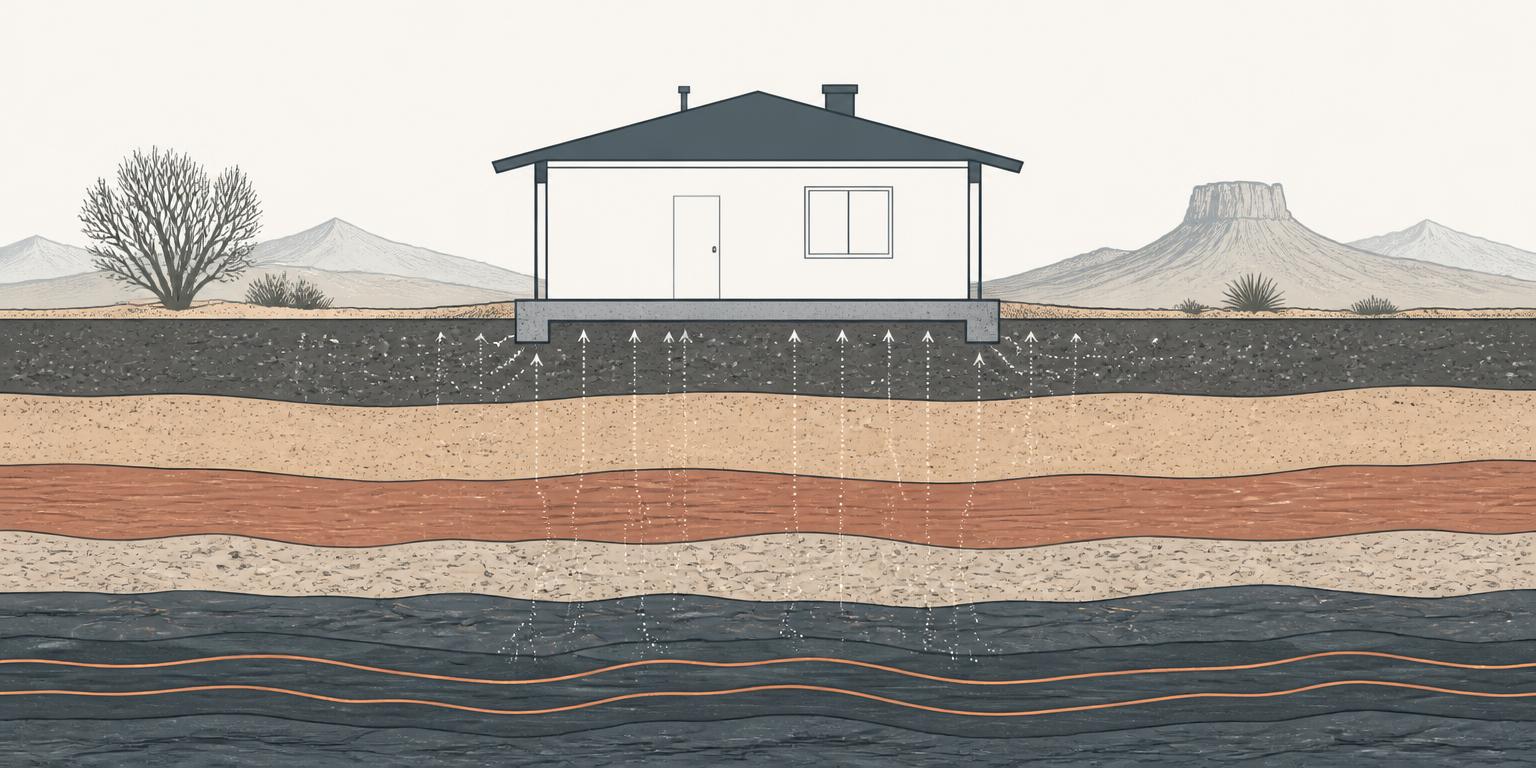
Because most Albuquerque and Rio Rancho homes are slab-on-grade, there is no basement buffer: whatever enters through slab cracks and the perimeter joint arrives directly in the rooms you live in. Levels vary house to house, so the only number that matters is the one measured in your home.
EPA radon action levels
Scale shown in picocuries per liter (pCi/L).
Green is at or below the typical US indoor average. Amber is the range where the EPA suggests considering mitigation. Red is at or above the 4.0 pCi/L action level, where the EPA recommends fixing the home.
Services
What we do
Testing, diagnostics, mitigation, and verification — for every foundation type we see across the metro.
- Radon mitigation systemsPermanently lower radon in an existing home with an active sub-slab system.
- Radon testingGet a defensible measurement of your home's radon level.
- Post-mitigation testingProve the installed system actually lowered the radon level.
- Crawlspace mitigationSeal and depressurize exposed crawlspace soil, the largest radon entry point there is.
- Slab-on-grade mitigationMitigate the foundation type most Albuquerque homes are built on.
- New constructionBuild the system in during construction, at a fraction of the retrofit cost.
- Repairs & upgradesRestore or improve a system that has failed, aged, or never worked well.
- Real estate testingGet a defensible 48-hour result that keeps a closing on schedule.
Process
How a project runs
- 1
Test
A 48-hour measurement under closed-house conditions on the lowest lived-in level.
- 2
Diagnose
Sub-slab communication testing determines how many suction points your home actually needs.
- 3
Install
Most systems are installed in a single day, with sealing and a manometer included.
- 4
Verify
After 24 hours of runtime, a 48-hour post-mitigation test documents the result.
- 5
Maintain
Check the manometer monthly and retest every two years.
Cost
What it costs
Radon mitigation is priced on how hard it is to move air under your specific foundation — not on square footage. Use this for an informed range, then we will measure and give you a real number.
Radon mitigation cost estimator
An informed range, not a quote. A real number requires a sub-slab communication test at the house.
Typical installed range
$1,400 – $2,200
- Includes diagnostics, system installation, sealing, and a manometer.
- Confirm that post-mitigation verification testing is included in any quote.
Learn
Start with the facts
We would rather you understand radon than take our word for it.
- Radon mitigation costRadon mitigation is priced on how hard it is to move air under your specific foundation — not on square footage. Here is what each line item actually represents.
- Radon in New MexicoNew Mexico sits on some of the most uranium-rich geology in the country. Combine that with dry, permeable soils and it becomes clear why testing matters here more than in most states.
- EPA action levelsTwo numbers drive nearly every radon decision: 4.0 pCi/L, where the EPA recommends action, and 2.0 pCi/L, where it suggests considering it. Here is what sits behind them.
- How mitigation worksA mitigation system does not filter radon. It reverses the pressure difference that pulls soil gas into your home in the first place.
- Testing methodsEvery radon test measures the same thing, but the method determines how much you can trust the number and what decisions it can support.
- Buying a homeAn elevated radon result is one of the most fixable findings in a home inspection. Handled early, it rarely threatens a closing.
Questions homeowners ask us first
Yes — elevated results show up throughout Bernalillo and Sandoval counties. New Mexico's uranium-bearing soils and dry, permeable ground let soil gas move easily toward foundations. Levels vary house to house, even between neighbors, so a test on your own home is the only reliable answer.
Talk to someone who does this every day
Call (505) 407-8774 for straight answers about testing, results, and what a system for your home would involve.